

December's Full Moon: A Rare Celestial Event and Geminids Meteor Shower
This December, we're treated to a stunning celestial spectacle with not just one, but two amazing events taking place in the night sky. As the year winds down, the December full moon, known as the "Cold Moon," will rise, and it promises to be a mesmerizing sight, marking a rare occurrence that only happens once every 18.6 years. At the same time, the Geminid meteor shower, one of the most spectacular meteor showers of the year, will be lighting up the sky.
The Cold Moon will reach its full phase on December 15, 2024, at precisely 9:01 UTC, or 4:01 a.m. EST. This full moon is particularly special because of its extreme northerly rise and set points. This happens due to the moon’s tilted orbit and Earth’s axial tilt, making the moon appear higher in the sky than usual. In fact, December’s full moon is always the highest of the year, and it will stay visible longer than any other full moon. The Cold Moon will also coincide with the Major Lunar Standstill, an event that occurs just once every 18.6 years, making this a once-in-a-lifetime opportunity to witness this celestial phenomenon. The next time the moon will rise at such an extreme position won’t happen until 2043, so make sure you don’t miss it!
Also Read:- MicroStrategy's Potential Nasdaq 100 Inclusion: Could This Signal a Tech Top?
- Tim Southee's Farewell: A Fitting End to an Impressive Career as New Zealand Aims for Consolation
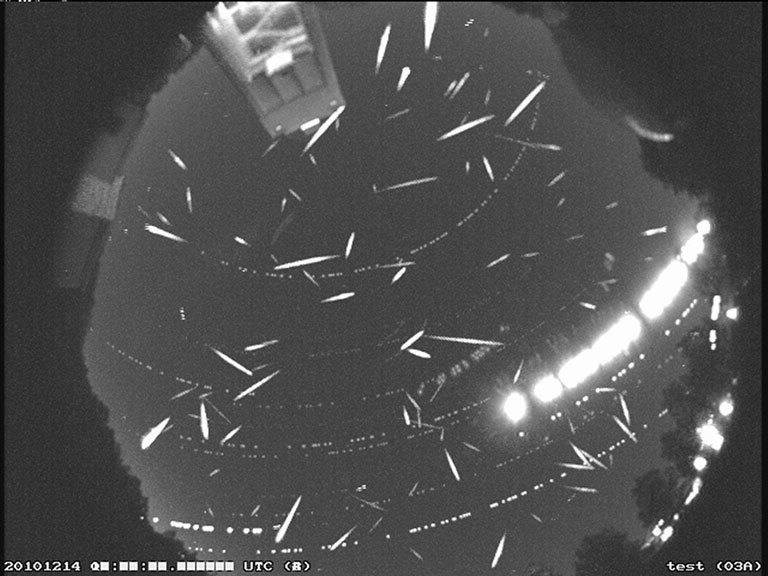
As if this wasn't enough, December also brings the Geminids meteor shower, which will peak on the night between December 13 and 14. The Geminids are known for being bright, fast, and plentiful, with the potential to produce over 100 meteors per hour. This makes the Geminids one of the most reliable meteor showers of the year. The meteors you see are actually bits of debris left behind by an asteroid named 3200 Phaethon. What makes the Geminids so unique is that most meteor showers originate from comets, but the Geminids come from an asteroid. Some astronomers even refer to Phaethon as a "rock-comet" because, like comets, it leaves behind debris that creates the meteor shower.
However, this year, the Geminids may not be as spectacular as usual. A waxing gibbous moon, which will be more than 50% illuminated, will compete for attention in the sky. The moonlight will wash out the dimmer meteors, leaving only the brightest ones visible. Although this will reduce the rate of meteors from the usual 50 per hour to around 15 per hour, it's still a treat compared to other meteor showers like the Lyrids. If you want to catch the best view of the Geminids, head out after 9 PM, ideally before dawn, and look away from the moon for the best viewing angle.
For those hoping to see a meteorite on the ground, the Geminids are one of the only meteor showers that have a small chance of producing meteorites. Most Geminids burn up 30-40 miles above the Earth’s surface, but occasionally, a meteor big enough to produce a fireball could make it to the ground.
So, whether you're enjoying the rare rise of the Cold Moon or marveling at the Geminids meteor shower, December’s night sky has something truly magical to offer. Make sure to bundle up, find a dark spot away from city lights, and enjoy these celestial wonders!
Read More:
0 Comments