

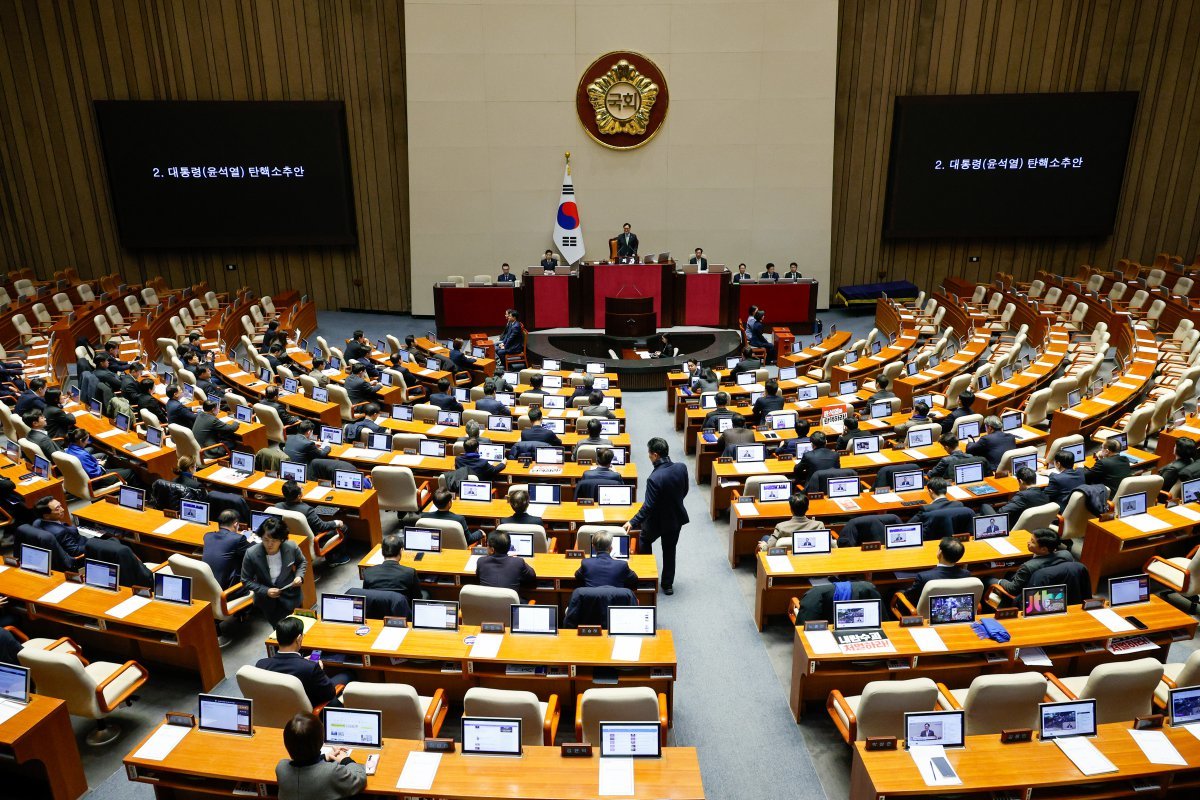
National Assembly Delays Presidential Impeachment Vote Amid Tensions
Today, South Korea witnessed high political drama as the National Assembly convened to vote on President Yoon Suk-yeol's impeachment motion. The proceedings, however, took a dramatic turn as National Assembly Speaker Woo Won-shik postponed the conclusion of the voting process, urging full participation from lawmakers across party lines.
The impeachment motion stemmed from allegations surrounding President Yoon’s handling of state affairs, including controversial emergency measures that have sparked public and political outcry. While the opposition, predominantly led by the Democratic Party, moved swiftly to cast their votes, the ruling People Power Party (PPP) adopted a party-line decision to reject the motion. Most PPP lawmakers walked out of the chamber following their stance, leaving only three members—Ahn Cheol-soo, Kim Ye-ji, and Kim Sang-wook—participating in the voting.
Also Read:- The Fascinating Resilience of Chernobyl Dogs
- Jacob Trouba Traded to Ducks, Closing a Memorable Chapter with Rangers
Speaker Woo's appeal to PPP lawmakers to join the process highlighted the gravity of the situation. He questioned how history and the international community would judge the refusal to vote on such a critical national issue, emphasizing the responsibilities of elected officials to act as representatives of the people. Woo’s deliberate delay in ending the voting session appears to be a strategy to allow additional lawmakers time to reconsider their position before the midnight deadline.
The visible divide among lawmakers extended beyond the assembly floor. Ahn Cheol-soo, a senior PPP figure, faced internal criticism but was applauded by opposition members for standing firm in his decision to vote. His actions were later followed by Kim Ye-ji and Kim Sang-wook, whose presence in the voting room drew public and parliamentary attention. Their choices have further deepened rifts within the ruling party, signaling potential internal conflicts ahead.
As the impeachment motion hangs in limbo, public sentiment remains charged. Tens of thousands of demonstrators have taken to the streets of Seoul, calling for accountability and transparency. Political analysts suggest that the outcome of this vote could significantly alter the trajectory of Korean politics, setting a precedent for how executive powers are scrutinized in the future.
This event is a reminder of the delicate balance between governance and accountability, as the nation watches with bated breath. How this unfolds will undoubtedly shape not only the current administration but also the political landscape for years to come.
Read More:


0 Comments