

Tasmania Faces Another Hung Parliament After Early Election Gamble
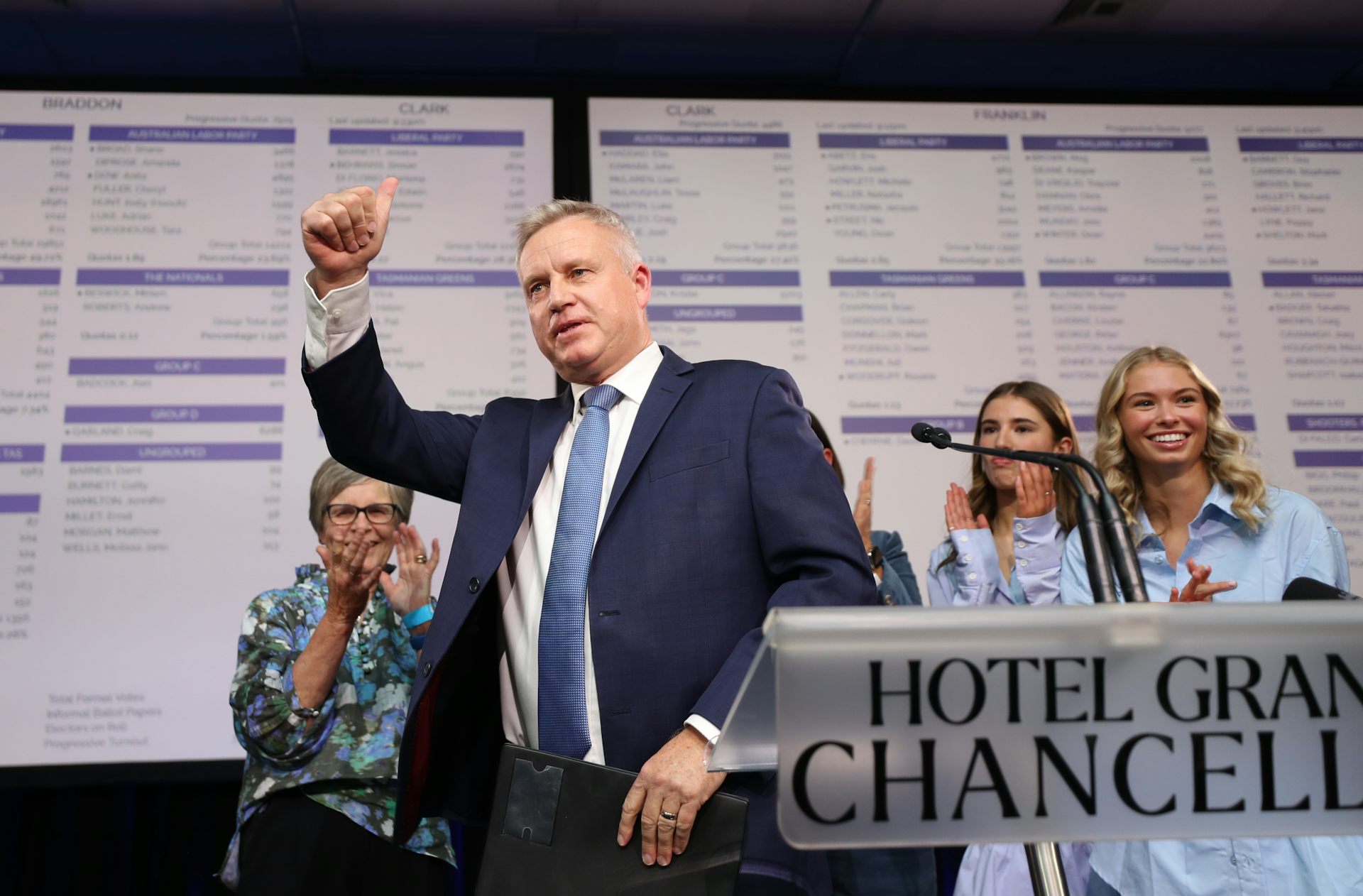
Tasmania has once again landed in political limbo. After an early election called just 16 months after the last, voters have delivered what can only be described as déjà vu—a hung parliament eerily similar to the one before. The Liberals, led by Premier Jeremy Rockliff, are on track to secure 14 seats, just shy of the 18 needed for a majority. Labor trails with 10 seats, the Greens have secured five, and independents are poised to play kingmaker once again. The seventh seat in Bass remains undecided, and depending on how it falls, either major party might gain a slight edge—but not enough to govern alone.
Premier Rockliff was first to claim victory on election night, stating that the voters had “re-endorsed” the Liberal government. He’s planning to approach the Governor and ask to recommission his government. However, without a clear path to a majority, that next step hinges on negotiating support from a predominantly progressive crossbench—many of whom oppose the Liberals’ marquee policies like the Macquarie Point stadium project.
Also Read:- UC Berkeley Professor’s Tragic Death Followed Chilling Warnings to the Court
- Manny Pacquiao’s $220M Journey From Poverty to Boxing Royalty
On the other side, Labor leader Dean Winter left the door open to forming a minority government if Rockliff fails. In contrast to previous elections where Labor quickly ruled out deals with the Greens or independents, Winter struck a more collaborative tone. Still, his party’s performance—recording its lowest primary vote in over a century—is raising eyebrows and questions about strategy. Labor suffered a 2.9% swing against it, indicating that the electorate may have blamed them for dragging Tasmania back to the polls so soon.
This leaves Tasmania facing weeks of uncertainty as pre-poll and postal votes continue to be counted. Meanwhile, crossbenchers like Kristie Johnston, Craig Garland, David O’Byrne, and new MP Peter George are holding crucial cards. Many of them ran on platforms directly opposing salmon farming, native forest logging, and large infrastructure projects like the stadium. Negotiations will be tough, and whoever hopes to govern will need to show real willingness to collaborate.
What’s especially striking is that this is now becoming Tasmania’s new political norm. No party has won a majority in the last two elections. Voters, perhaps fed up with both major parties, are increasingly turning to smaller voices with sharper, more targeted messages. The result? A parliament that reflects division and demand for compromise, not dominance.
So what’s next? Rockliff will likely try to piece together support from at least four crossbenchers. If he fails, Winter gets his shot. But no matter who forms government, one thing is clear: Tasmanians are no longer handing out easy wins. Any government that emerges from this result will need to negotiate hard, govern smarter, and prove it can deliver results without a comfortable majority behind it.
In short, Tasmania’s message to its political class is loud and clear: cooperation over conflict, substance over slogans, and please—no more elections unless absolutely necessary.
Read More:


0 Comments