

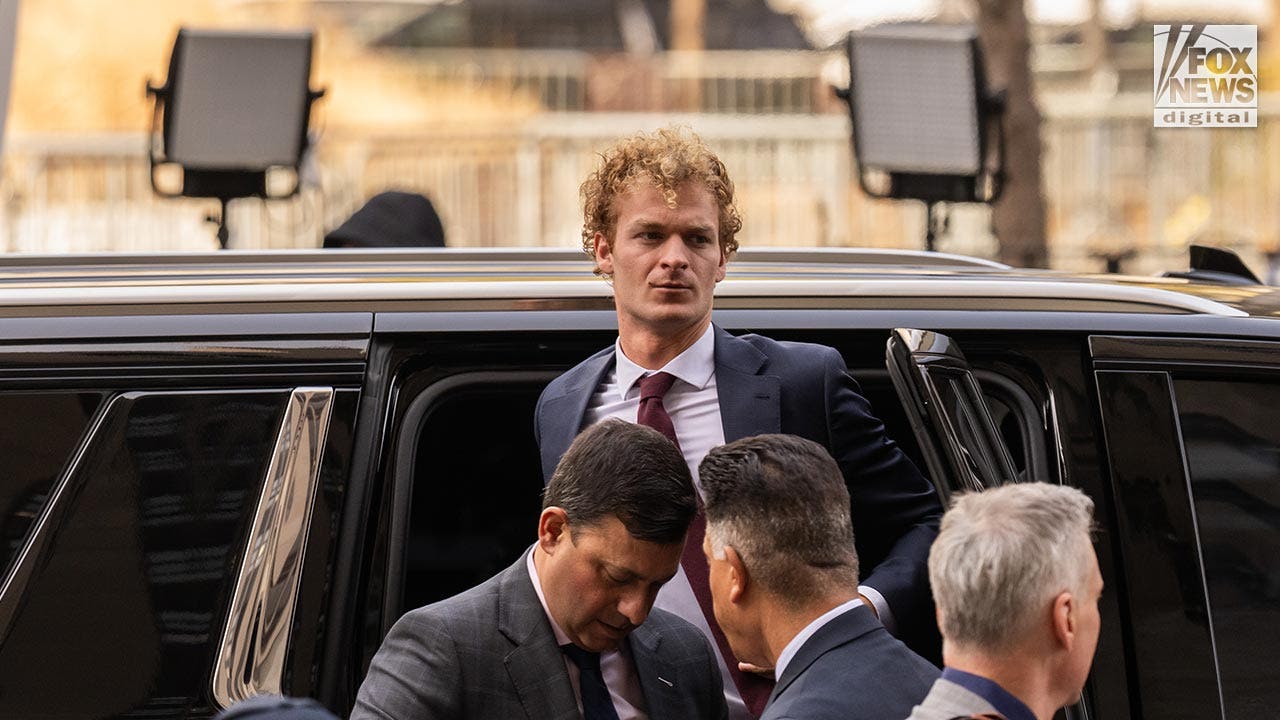
Daniel Penny Trial: Jury Requests Key Evidence During Deliberations in Subway Death Case
The trial of Daniel Penny, the Marine veteran charged with manslaughter in the subway chokehold death of Jordan Neely, has entered its final stages, with the jury deliberating the outcome of the case. Over the past few days, the jury has shown keen interest in reviewing key evidence that could be pivotal in determining Penny’s fate. The case, which has drawn significant public attention, centers around an incident on the New York City subway where Penny, attempting to subdue Neely, placed him in a chokehold after Neely allegedly made threats against passengers.
During the third day of deliberations, jurors requested to revisit several crucial pieces of evidence, including videos, testimonies, and forensic reports. One of the videos in question, filmed by a bystander, shows the moments when Penny restrained Neely on the subway train. This video, which was introduced earlier in the trial, has been a key piece of evidence, showing the tense confrontation between the two men. Jurors specifically asked to rewatch this video multiple times, underscoring its significance in assessing the circumstances of the incident.
Also Read:- More Rental Bikes Coming to Hamm: Expansion of Metropolrad Ruhr
- TD Bank Faces Setbacks as Stock Dips Following Suspension of Guidance Amid Strategic Review
In addition to the video footage, the jury also requested to hear a portion of Penny's police interrogation again. In that recording, Penny describes his actions during the encounter, explaining that Neely, who was reportedly high on drugs and behaving aggressively, had threatened to kill everyone on the train. Penny said that after hearing Neely’s threats, he felt compelled to act to protect the passengers, which led to him using a chokehold to subdue Neely.
Along with these video and audio recordings, the jury has been reviewing expert testimony, particularly that of Dr. Cynthia Harris, the forensic pathologist who performed the autopsy on Neely. Dr. Harris testified that Neely’s cause of death was the result of asphyxiation due to the chokehold. However, she also acknowledged that her conclusions would not have changed even if toxicology tests had shown the presence of drugs like fentanyl, which might have complicated the case. The defense has argued that Neely’s erratic behavior, fueled by drugs and a history of mental health issues, played a significant role in the tragic outcome.
The jury has also requested clarification on legal definitions, particularly concerning "recklessness" and "negligence." These terms are central to the charges against Penny, as the prosecution must prove that his actions were not just unfortunate but criminally reckless. If convicted of second-degree manslaughter, Penny could face significant prison time. However, the defense argues that Penny acted out of a reasonable fear for his safety and the safety of others, making his actions justified under the law.
As the jury continues deliberating, the tension surrounding the case remains palpable. Outside the courtroom, protests have taken place, with advocates on both sides of the issue—some arguing that Penny’s actions were necessary to prevent a tragedy, while others contend that Neely’s life could have been spared. The decision in this case will undoubtedly have broader implications, touching on issues of self-defense, mental health, and the treatment of the homeless in urban environments.
With deliberations ongoing, all eyes remain on the jury as they consider the fate of Daniel Penny, a man whose actions have sparked a nationwide debate.
Read More:


0 Comments