

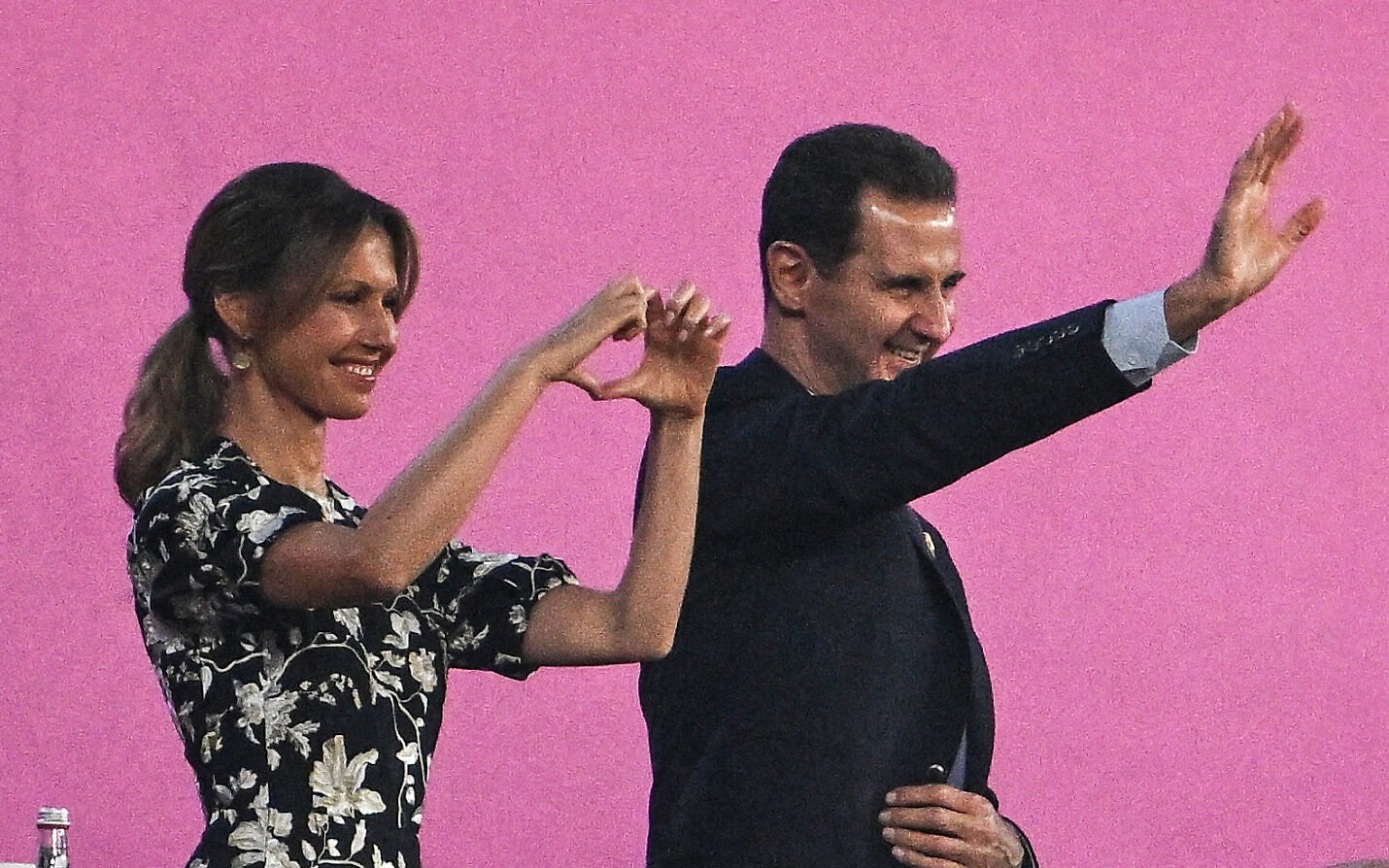
How the Media Was Deceived by Bashar and Asma al-Assad's Image
When Bashar al-Assad’s brutal regime crumbled in Syria, it marked the end of a harrowing 13-year civil war, with hundreds of thousands of lives lost. Yet, what remains shocking is how the media was initially fooled by the façade of Bashar and his wife, Asma. For years, the world viewed them through a lens of charm and sophistication, completely overlooking the atrocities happening behind closed doors.
Also Read:- Viganella’s Unique Solar Mirror Breaks Again, Leaving the Village in Darkness
- Jerami Grant's Stellar Performance Not Enough as Spurs Stun Trail Blazers with Late Comeback
Bashar al-Assad, who ruled Syria with an iron fist since 2000, was often described by foreign journalists as “awkward and gangly,” with many seeing him as an unassuming figure. His meek demeanor led some to believe that he wasn’t the type to be a ruthless dictator. Even more surprising was his wife, Asma, whose portrayal in the media was almost too perfect to be true. In 2011, just as the Syrian uprising began, Vogue magazine ran a profile of her, calling her "a rose in the desert." Asma was depicted as the fresh, elegant first lady who avoided flashy displays of wealth and fashion. She was described as someone with an understated, chic style that contrasted with the ostentatious displays of power typically associated with Middle Eastern rulers.
At the time of the Vogue article, Assad had already overseen the deaths of thousands of civilians, including hundreds of children. Yet, the focus of the article was Asma’s elegance and poise, with little mention of the atrocities unfolding in her country. This caused an immediate uproar, yet it wasn’t until later that the full extent of the deception became clear. The article was part of a carefully orchestrated PR campaign, and it was later revealed that the Assad family had paid an American firm, Brown Lloyd James, $5,000 a month to manage their image. This revelation highlighted just how far the Assads had gone to craft an image of normalcy and grace, while the world turned a blind eye to the brutal repression and human rights violations occurring in Syria.
The world’s perception of Bashar and Asma al-Assad is now forever changed, as the true extent of their rule becomes clear. What began as a carefully managed PR effort evolved into a global realization of how easily power can manipulate perceptions through media. The Vogue article, once an innocent piece on a charming first lady, now serves as a reminder of how style, grace, and charm can mask even the most brutal regimes. It was a sobering lesson about the role of media in shaping political narratives and the dangers of overlooking the darker sides of power.
Read More:


0 Comments