

Israel Strikes Syria as Tensions Escalate and Golan Heights Expansion Plan Approved
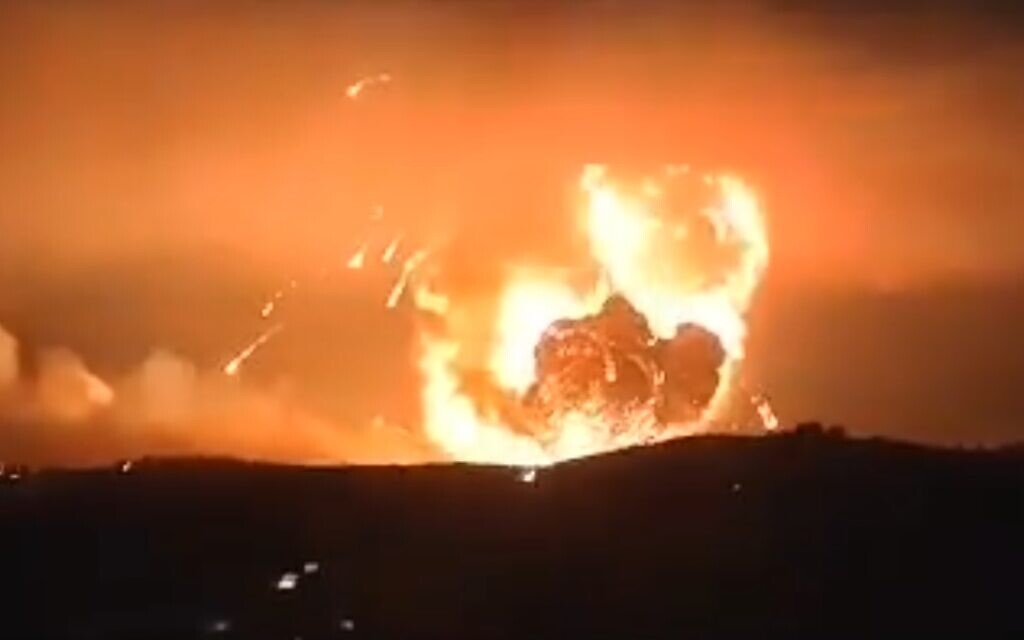
Recent developments in Syria have brought the Israeli military's actions into sharp focus. A massive explosion in Syria’s Tartus region last week, which was reportedly the most intense airstrike the country has seen in a decade, was so powerful that it was detected by earthquake sensors in Turkey, located 820 kilometers away. This explosion occurred amid Israel's escalating military operations in Syria, which have targeted multiple military sites, including missile depots and air defense units. According to the Syrian Observatory for Human Rights (SOHR), Israeli fighter jets launched a barrage of airstrikes, including strikes on military barracks and weapons depots in the Tartus and Hama regions. No casualties were reported, but the scale of the attack marks a significant escalation in the ongoing conflict.
These strikes are part of Israel's broader strategy, which has been focusing on eliminating military infrastructure linked to the Syrian regime. Israeli officials have confirmed that these operations are in response to the fall of Bashar al-Assad’s regime to Islamist rebel forces. In addition to the military airstrikes, Israel has been vocal about its intentions to secure its borders, with Prime Minister Benjamin Netanyahu announcing a controversial plan to increase the population in the Golan Heights, an area Israel has occupied since 1967. The plan aims to double the Israeli population in this strategically important region, which is a move that has drawn condemnation from international players, including Saudi Arabia and Qatar. These nations have called Israel’s actions a violation of international law and an obstacle to peace.
Also Read:- Heavy Rains Disrupt Events in Tahiti: Multiple Cancellations Due to Bad Weather
- The Bali Nine's Return: A Journey of Reflection, Relief, and New Beginnings
The Golan Heights, a region that borders both Syria and Israel, has been a flashpoint in the ongoing conflict. Following the recent power shifts in Syria, Israel has increased its military presence in the Golan, citing security concerns as the reason for its extended stay in the area. Despite this, Israeli officials have maintained that their goal is not to engage in further conflict with Syria but to prevent terrorist groups from using the region as a base. However, the situation remains tense, and the global community, including the United Nations, has raised concerns about Israel’s actions, urging the country to pull back from the demilitarized zone it has entered.
At the same time, Syria's rebel leaders, such as Abu Mohammed al-Jolani of Hayat Tahrir al-Sham, have distanced themselves from any desire to engage in further conflict with Israel. In statements made to Syrian media, al-Jolani emphasized that his group was not seeking conflict with Israel and that Syria's immediate priority should be rebuilding the nation after years of civil war. He accused Israel of using weak justifications to continue its attacks, suggesting that Syria's war-torn state should not be a reason for escalating violence in the region.
The current situation is a complex one, with Israeli airstrikes continuing to target Syria’s military infrastructure, including chemical weapons and missile sites. This military action, alongside Netanyahu’s announcement of a plan to expand settlements in the Golan Heights, signals a potential shift in Israel’s strategy in the region. The international community, including the United Nations and European powers like France and Germany, has expressed concern about these developments, calling for Israel to respect Syria’s sovereignty and pull out of the newly occupied buffer zones.
As the conflict continues to unfold, all eyes will remain on the region, with international diplomats and governments closely monitoring Israel’s next moves and the broader implications for peace and stability in the Middle East.
Read More:


0 Comments