

South Korea's President Yoon Suk Yeol Impeached Amid National Turmoil
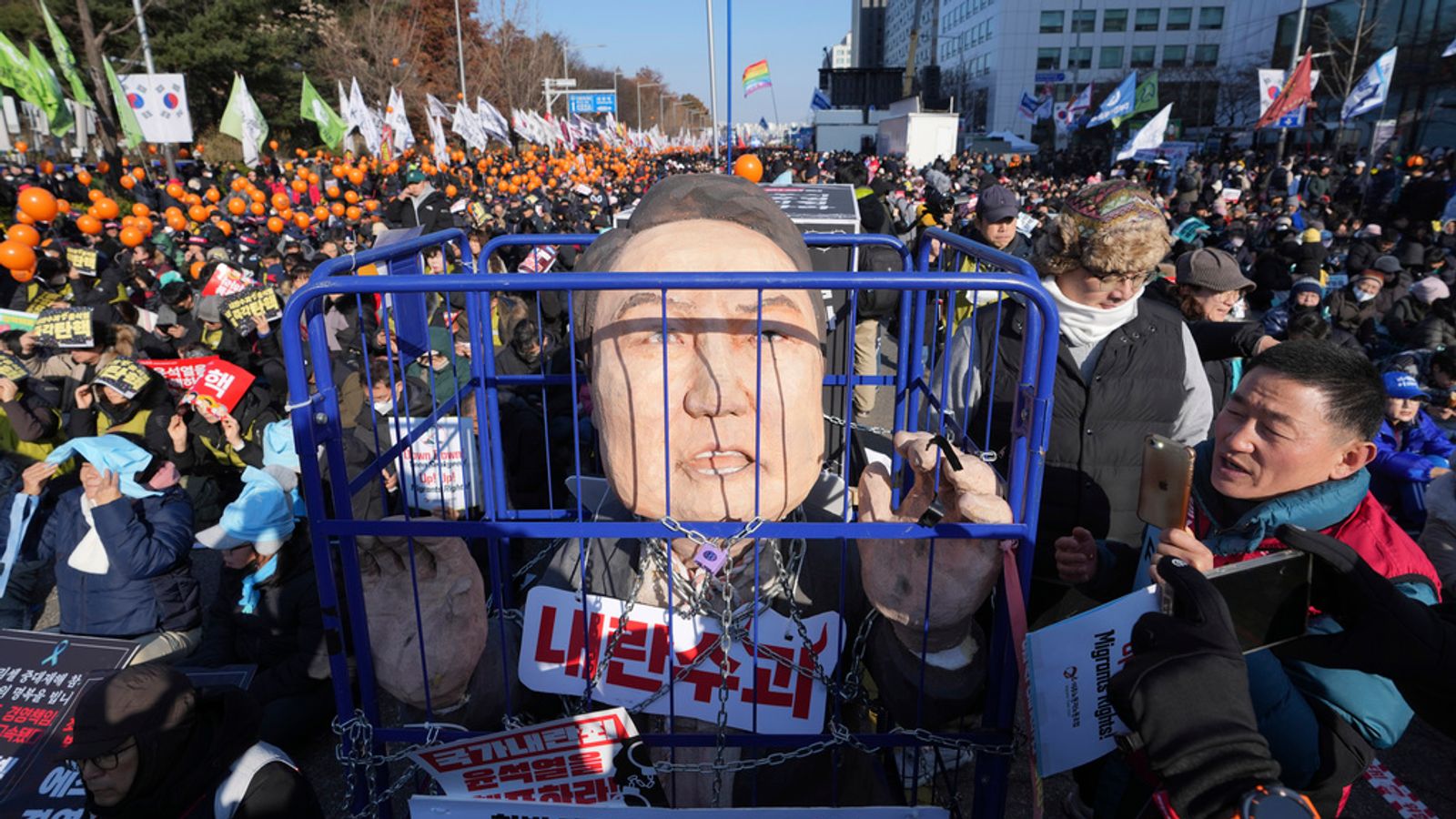
In a historic and dramatic turn of events, South Korea's President Yoon Suk Yeol has been impeached following a vote in the National Assembly. The decision to suspend his presidency comes after intense political turmoil, which reached a boiling point when Yoon's controversial martial law declaration last week shook the nation's political landscape. This move has sparked mass protests across Seoul, with thousands of citizens celebrating the impeachment, while others express anger and disappointment over the result.
The impeachment vote saw a majority of 204 out of 300 lawmakers in favor of removing President Yoon from office. This marks a significant moment in South Korea's political history, as the president has been accused of attempting to destabilize the nation through his martial law actions. Yoon's declaration of martial law, which was intended to restore order, was widely seen as an overreach and led to widespread public outcry, particularly given the harsh memories of past authoritarian measures in the country. His actions plunged the nation into uncertainty, with fears growing over a potential erosion of democratic values.
Also Read:- Bryce Cotton Dominates NBL with Historic 4th Consecutive 40-Point Game
- Zimbabwe and Afghanistan's Decider in Harare: A Thrilling T20I Showdown
While the impeachment vote has passed, it does not yet mean that Yoon is permanently out of office. The country's Constitutional Court will now have six months to deliberate on whether to uphold or reverse the decision. Until then, Prime Minister Han Duck-soo has assumed the role of acting president, vowing to stabilize the situation and restore normalcy to governance. Han expressed grave responsibility for the current crisis, acknowledging the severe political fallout, but emphasized that he would ensure a steady continuation of state affairs.
President Yoon, in a televised address, expressed his willingness to "temporarily stop his journey" but insisted that his vision for the future of South Korea would not be abandoned. He stated that he would continue to do his best for the country, despite his suspension from official duties. His remarks reflect the deep political divide in the country, with many supporters of the president continuing to rally for his reinstatement, while opponents celebrate the vote as a victory for democracy.
The impeachment also caused a significant shake-up within Yoon's own People Power Party (PPP), as all five members of its supreme council resigned in the wake of the vote. The PPP is now in a state of emergency leadership, further complicating the political landscape. The resignation of key figures within the ruling party has only heightened the sense of political chaos, as the country waits for the Constitutional Court's decision.
Internationally, the European Union has called for a swift and orderly resolution to the crisis, urging South Korea to adhere to its constitution as it navigates this political upheaval. Despite the internal turmoil, South Korea's key alliances, particularly with the United States and Japan, remain a priority, and the acting president has reassured foreign partners that the country will maintain its international commitments.
As the political drama continues to unfold, South Korea faces a crucial period of uncertainty. The nation now looks to its Constitutional Court to determine the future of its leadership and the path forward for its political system. Whether this marks the beginning of a new chapter in South Korea’s democracy or the start of a prolonged period of instability remains to be seen.
Read More:


0 Comments